
 EN
EN
Chemical Treatments: Forming Protective Layers on Steel
Chemical treatments alter steel surfaces through controlled chemical reactions, creating durable barriers against corrosion. These methods are essential for extending the lifespan of steel components in aggressive environments. Below, we examine two key techniques: passivation and pickling for stainless steel, and zinc phosphate conversion coating as a primer for paint systems.
Passivation and Pickling for Stainless Steel Surface Activation
Passivation enhances the natural corrosion resistance of stainless steel by removing surface contaminants—especially free iron particles left from machining—and restoring a uniform, protective chromium oxide layer. Typically performed after fabrication, it involves immersion in a nitric or citric acid bath. Without passivation, embedded iron can initiate localized rust, even on otherwise high-grade alloys. Pickling, often conducted first, uses stronger acidic solutions (e.g., mixtures of nitric and hydrofluoric acid) to remove heat tint, welding scale, and oxide layers, yielding a clean, matte finish. Together, these steps ensure stainless steel achieves its full design potential—particularly critical in food processing, medical devices, and marine applications where hygiene and long-term integrity are non-negotiable. The process does not affect dimensional accuracy or mechanical properties and is standardized under ASTM A967. When applied correctly and maintained periodically, passivation preserves passive film integrity and supports service life extensions measured in decades.
Zinc Phosphate Conversion Coating as a Steel Primer for Paint Systems
Zinc phosphate conversion coating deposits a thin, crystalline layer of zinc phosphate onto carbon steel via reaction with a phosphoric acid solution containing zinc ions. This micro-rough, chemically bonded layer dramatically improves adhesion for subsequent paint, powder coating, or other organic finishes while adding a secondary barrier against under-film corrosion. Widely adopted in automotive manufacturing, appliances, and metal furniture, it significantly extends topcoat durability—especially at edges and cut zones where conventional coatings often fail. Importantly, zinc phosphate is not a standalone protective finish; it functions exclusively as a pretreatment, requiring a compatible topcoat for outdoor or corrosive exposure. Its effectiveness relies on proper cleaning and activation prior to application, and performance is validated across industry standards including ISO 9227 salt-spray testing.
Hot-Dip Galvanizing: The Most Durable Steel Corrosion Protection Method
Metallurgical Bonding and Dual-Action Zinc Protection for Steel
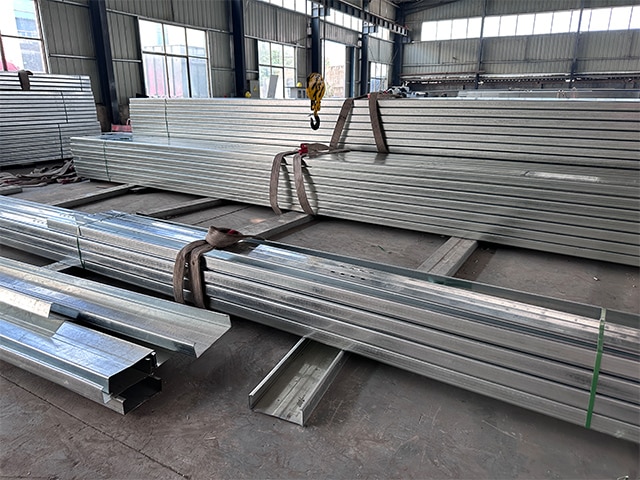
Hot-dip galvanizing (HDG) immerses cleaned steel in molten zinc at approximately 450 °C, initiating a diffusion-controlled reaction that forms intermetallic iron–zinc alloy layers topped with pure zinc. This metallurgical bond produces a coating harder than the base steel—up to 250 HV—delivering exceptional resistance to abrasion and impact. Protection operates through two complementary mechanisms: a physical barrier isolating steel from moisture and oxygen, and cathodic (sacrificial) protection, where zinc corrodes preferentially to shield exposed steel at scratches or cut edges. Over time, atmospheric exposure forms a stable, insoluble zinc patina that slows corrosion to as little as 0.1 µm per year in mild climates. Because HDG grows both laterally and perpendicularly, corners, edges, and recesses receive equal or greater coverage than flat surfaces—eliminating the thin-coating vulnerabilities common with paint-based systems. This dual-action defense—barrier plus galvanic—makes HDG the benchmark for long-term structural steel protection.
Long-Term Performance: 50+ Years of Steel Protection in Real-World Environments
Field data consistently confirm hot-dip galvanized steel delivers decades of maintenance-free service. In rural atmospheres, an 85 µm coating typically lasts over 50 years; in industrial or marine settings, service life routinely exceeds 30 years. According to the American Galvanizers Association’s time-to-first-maintenance chart, a 100 µm coating can endure more than 70 years in temperate inland areas. Buried galvanized structures—benefiting from stable soil chemistry—have achieved documented service lives of up to 120 years (Structure Magazine, 2015). This longevity translates directly into lifecycle cost savings: the initial HDG investment is often the only one required, avoiding repeated repainting, inspection, and repair cycles inherent to alternative systems. For bridges, transmission towers, and warehouse frameworks, specifying HDG delivers a proven, half-century-plus shield that aligns with infrastructure resilience goals.
Electrochemical and Advanced Techniques for Specialized Steel Applications
Beyond traditional hot-dip methods, electrochemical and high-energy beam processes provide tailored corrosion protection and surface hardening for steel. This section compares the precision-focused electrogalvanizing approach with the proven durability of hot-dip galvanizing, then explores how plasma and laser alloying are ushering in a new era of surface engineering.
Electrogalvanizing vs. Hot-Dip Galvanizing: Precision vs. Durability for Steel
Electrogalvanizing uses electrodeposition to apply a smooth, tightly controlled zinc layer—typically 5–25 µm thick—onto steel at ambient temperature. Its fine thickness control and uniform appearance make it ideal for automotive body panels, appliance exteriors, and parts requiring precise dimensional tolerances and immediate paintability. In contrast, hot-dip galvanizing produces a thicker (50–100+ µm), metallurgically bonded coating composed of distinct iron–zinc intermetallic phases (gamma, delta, zeta) and outer pure zinc. This structure delivers superior abrasion resistance, edge coverage, and long-term sacrificial protection—even when scratched—making HDG the preferred choice for infrastructure, utility poles, and outdoor structural steel. While electrogalvanizing excels in high-volume, tightly controlled fabrication lines, its thinner coating limits suitability to indoor or mildly corrosive environments. HDG remains unmatched for demanding, long-life applications where minimal maintenance is mandatory.
Next-Generation Steel Surface Treatments: Plasma and Laser Alloying
Plasma alloying employs a glow discharge in a vacuum chamber to ionize nitrogen, carbon, or chromium atoms, which diffuse into the steel surface at elevated temperatures—forming hard, corrosion-resistant nitrides or carbides without bulk heating. Laser alloying scans a focused, high-power laser beam across the surface, melting a shallow zone while injecting alloying powder; rapid solidification locks in a fine-grained, hardened matrix enriched with wear- and corrosion-resistant elements. Both techniques enable localized, distortion-minimized enhancement of complex geometries—ideal for high-value components such as tooling dies, valve seats, and aerospace fasteners. Unlike conventional coatings, these engineered surfaces integrate with the substrate, offering extended service intervals and performance in extreme thermal, abrasive, or chemically aggressive conditions. As industries demand higher reliability and longer asset lifespans, plasma and laser alloying represent the frontier of precision surface engineering for critical steel applications.
FAQ Section
What is the role of passivation in stainless steel treatment? Passivation removes surface contaminants and restores a protective chromium oxide layer, enhancing the corrosion resistance of stainless steel.
How does zinc phosphate coating improve paint adhesion? Zinc phosphate creates a micro-rough, chemically bonded layer that dramatically improves paint or powder coating adhesion while adding a secondary corrosion barrier.
Why is hot-dip galvanizing considered durable? Hot-dip galvanizing combines a metallurgical bond and dual-action zinc protection to provide decades of maintenance-free service and long-term resistance to corrosion.
What are the advantages of plasma and laser alloying? Plasma and laser alloying create localized, hardened, and corrosion-resistant surfaces ideal for high-value components in extreme conditions.
What is the main difference between electrogalvanizing and hot-dip galvanizing? Electrogalvanizing offers precise, thin coatings, while hot-dip galvanizing provides thicker, durable, and sacrificial protective layers suited for more demanding environments.