
 EN
EN
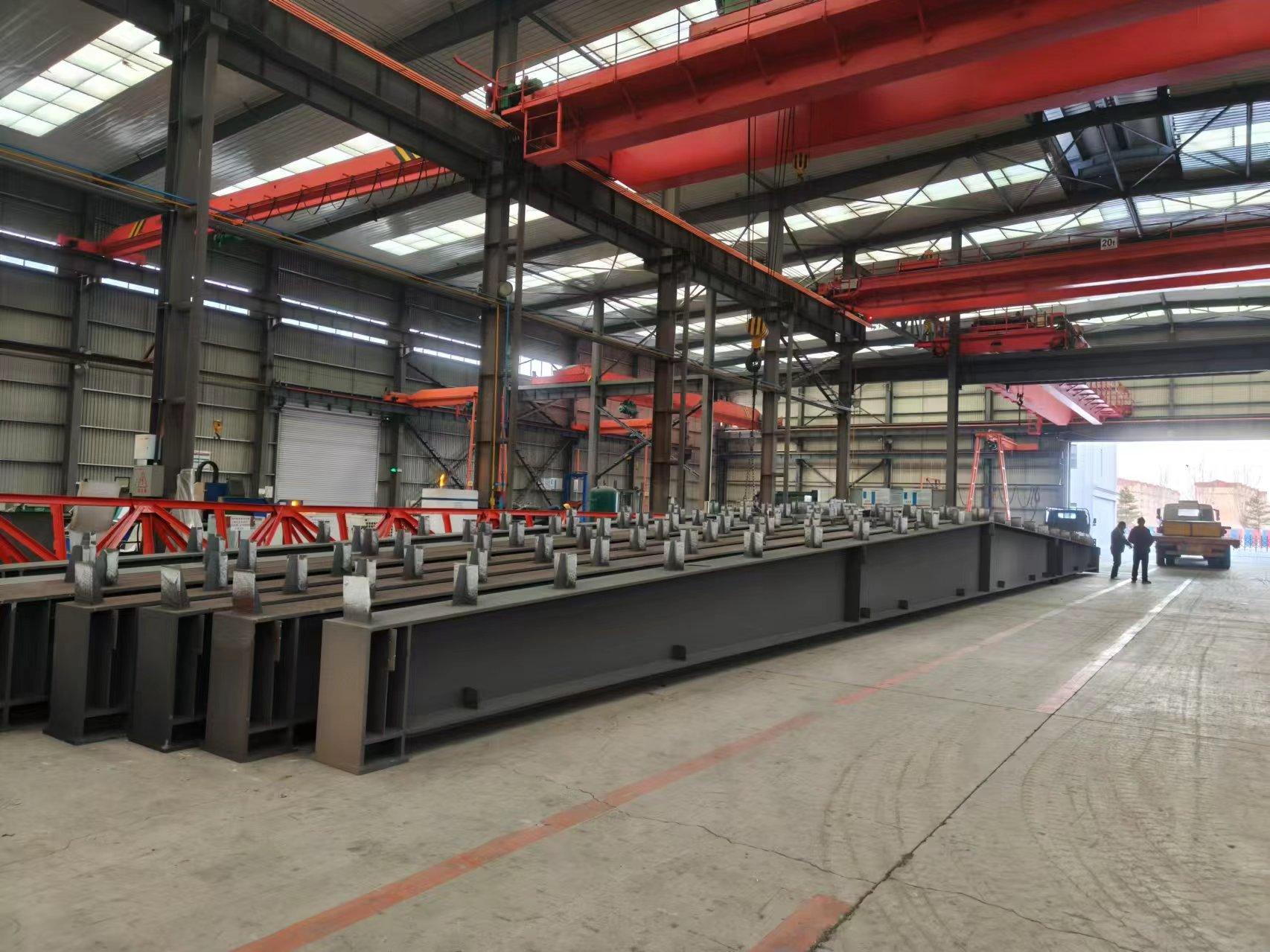
AISC Certification: The Foundational Benchmark for Structural Steel Fabricators
Why AISC certification remains the non-negotiable baseline for structural integrity and project eligibility
AISC certification is the definitive quality credential for structural steel fabricators—and a mandatory requirement, not a preference, in U.S. building codes and project specifications. Since its launch in 1976, more than 1,600 fabricators and erectors have earned the credential, making it the most widely recognized steel fabrication quality program in North America. Unlike welding-only certifications, AISC evaluates the entire manufacturing system: from contract review and engineering coordination through fabrication, inspection, and final delivery. Its core philosophy centers on error prevention—not post-production correction—ensuring issues are resolved before steel leaves the shop.
For specifiers and general contractors, requiring AISC certification is the fastest, most reliable way to screen for proven fabrication competence. Third-party verification confirms that documented procedures, personnel qualifications, and quality control systems are consistently implemented—not just written on paper. This foundational assurance reduces project risk, supports structural integrity across the full construction lifecycle, and strengthens accountability from shop floor to final erection.
Core audit pillars: Welding supervision, material traceability, and nonconformance control—and their direct impact on field erection reliability
AISC audits focus on three interdependent pillars that directly determine whether fabricated steel will fit, function, and perform as engineered during field erection:
- Welding supervision ensures certified welders work under qualified, on-site oversight—and that welding procedure specifications (WPS) and personnel qualifications are current, documented, and actively enforced.
- Material traceability requires mill test reports (MTRs) to accompany steel from mill to job site, with every beam, column, and connection verifiably matched to its specified grade, chemistry, and mechanical properties.
- Nonconformance control mandates systematic identification, documentation, root-cause analysis, and corrective action for any deviation—closing the loop to prevent recurrence.
Together, these practices minimize on-site rework, avoid schedule-critical delays, and ensure dimensional accuracy and load-carrying capacity align with design intent. When all three pillars are robust and verified, erectors can proceed with confidence—knowing the steel arriving on site has been held to a consistent, audited standard of reliability.
Complementary Certifications That Address Project-Specific Risk for Structural Steel Fabricators
Beyond baseline credentials, structural steel fabricators often require targeted certifications to manage specialized welding, regulatory, or international compliance risks. Two such standards provide rigorous, project-aligned assurance where general quality systems fall short.
ISO 3834-2 (Level C) for welding quality assurance in complex or high-reliability structures
ISO 3834-2 (Level C) establishes comprehensive quality requirements for fusion welding in applications where failure carries severe consequences—such as bridges, offshore platforms, pressure-retaining components, and seismic-resilient buildings. It goes beyond procedural documentation to enforce real-time control over welder qualification tracking, WPS verification at point of use, and full non-destructive testing (NDT) documentation.
Fabricators holding ISO 3834-2 (Level C) demonstrate deep integration of welding quality into daily operations—not just compliance at audit time. As reported by the International Institute of Welding in 2023, certified shops reduced weld defect rates by 35% compared to those relying solely on general quality management systems. For complex assemblies involving thick-section welding, dissimilar metals, or stringent toughness requirements, this certification delivers the welding integrity backbone that AISC alone does not address.
EN 1090-2 (EXC3) for CE-marked projects in international or EU-aligned infrastructure
EN 1090-2 (EXC3) is the highest execution class under the EU Construction Products Regulation (CPR) and is mandatory for CE marking of structural steel components used in buildings and civil engineering works where failure would endanger human life or cause significant economic loss. EXC3 applies to critical infrastructure—including hospitals, schools, rail stations, and major bridges—across the EU and increasingly in U.S. projects aligned with European procurement standards.
Compliance requires a fully implemented Factory Production Control (FPC) system, appointment of a Responsible Welding Coordinator (RWC), and end-to-end traceability from raw material heat numbers to final assembly. A 2021 study of European bridge projects found EN 1090-2 EXC3–certified fabricators reduced on-site rework by 20%, largely due to tighter factory controls and auditable documentation discipline. For fabricators pursuing EU tenders—or U.S. projects adopting EU-aligned safety frameworks—EN 1090-2 (EXC3) is not optional. It serves as contractual proof of capability to deliver safety-critical components with zero tolerance for process drift.
Verifying Real-World Compliance: Moving Beyond Certification Paperwork
The gap between certified procedures and shop-floor execution: Key red flags from NIST/SSRC audit data
Certification status alone does not guarantee consistent, day-to-day adherence to quality systems. NIST/SSRC audit data reveals a persistent gap: in 2021, 38% of audited fabricators showed discrepancies between documented weld procedure specifications (WPS) and actual welding practice. Common red flags include welder qualification records that cannot be verified on-site, material test reports (MTRs) missing heat number linkage, and nonconformance reports closed without root-cause analysis or effectiveness verification.
These inconsistencies compound rapidly—especially in multi-shift environments or when subcontractors are involved—and can lead to undetected defects that only surface during erection or, worse, in-service. A certification is only as strong as its implementation. Therefore, real-world verification must go beyond reviewing audit reports and instead focus on observable, repeatable evidence of system execution.
Five actionable verification steps—welder ID audits, PQR/WPS version tracking, real-time NDE documentation, MTR traceability, and subcontractor certification validation
To close the gap between certification and performance, adopt these five verification practices during supplier evaluation and ongoing surveillance:
- Welder ID audits: Physically cross-check active welders against qualification records—and confirm each welder’s stamp or digital ID matches the WPS assigned to the joint being welded. SSRC field data shows 22% of weld discontinuities in audited projects stemmed from unqualified welders (2020).
- PQR/WPS version tracking: Verify that current WPS revisions are supported by valid Procedure Qualification Records (PQRs), and that only approved, up-to-date documents are accessible and used on the shop floor—not archived copies or handwritten notes.
- Real-time NDE documentation: Require nondestructive examination (NDE) reports to be generated, signed, and timestamped at the moment of inspection, not compiled retroactively. Digital tools with audit trails strengthen integrity and deter post-hoc adjustments.
- MTR traceability: Trace each heat number physically marked on steel members back to its corresponding MTR—and confirm that chemistry, tensile strength, yield strength, and impact values meet specification requirements. Incomplete traceability is the strongest early indicator of substitution risk.
- Subcontractor certification validation: Extend verification to all subcontractors performing critical processes—including painting, galvanizing, machining, and secondary welding. A single uncertified subcontractor performing a regulated activity can invalidate the main fabricator’s compliance for the entire scope.
FAQ Section
What is AISC certification?
AISC certification is a quality credential for structural steel fabricators that evaluates the entire manufacturing system to ensure error prevention before steel leaves the shop. It is mandatory in U.S. building codes and widely recognized in project specifications.
What are the core audit pillars of AISC certification?
The three core audit pillars of AISC certification are welding supervision, material traceability, and nonconformance control, which together ensure steel reliability during field erection.
What is ISO 3834-2 (Level C) certification?
ISO 3834-2 (Level C) is a certification that demonstrates compliance with rigorous welding quality assurance requirements in high-reliability applications such as bridges, seismic-resilient buildings, and offshore platforms.
Why is EN 1090-2 (EXC3) certification important?
EN 1090-2 (EXC3) certification applies to critical infrastructure projects under EU Construction Products Regulation. It ensures CE marking of structural steel with reliable traceability, factory controls, and safety adherence.
How can real-world compliance gaps be closed?
Compliance gaps can be closed using verification steps such as welder ID audits, PQR/WPS tracking, real-time NDE documentation, MTR traceability, and subcontractor certification validation during supplier evaluation.