
 EN
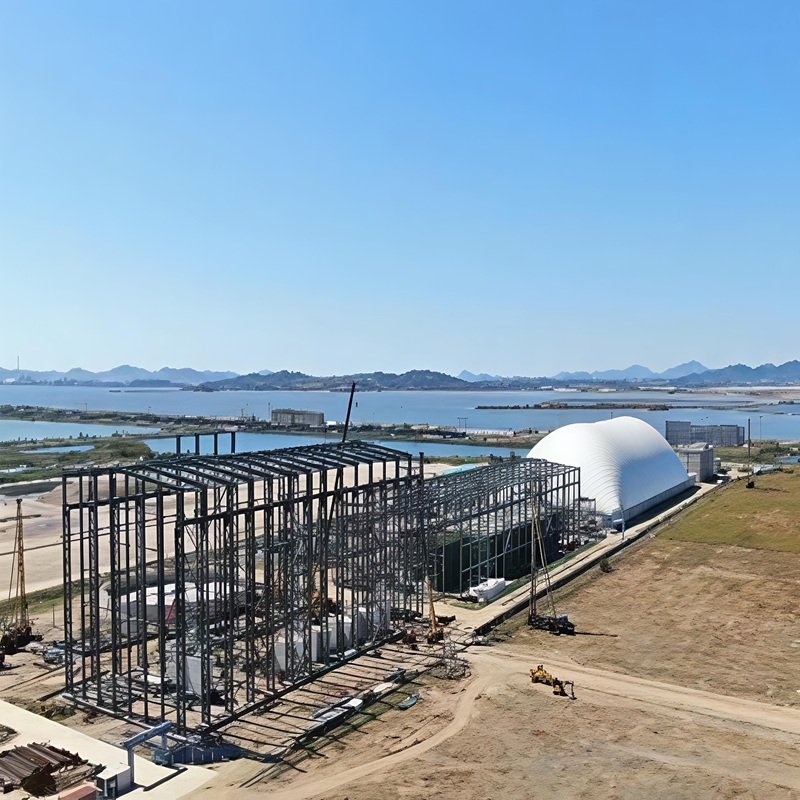
Key Agricultural Building Types Built with Custom Steel Buildings
Milking Sheds, Greenhouses, and Equipment Sheds: Purpose-Optimized Steel Solutions
Modern custom steel buildings deliver precision-engineered solutions for milking sheds, greenhouses, and equipment storage—each shaped by operational demands and environmental challenges. Milking parlors require hygienic, code-compliant environments; steel’s non-porous surfaces resist bacterial growth and simplify sanitation, helping farms meet strict dairy regulatory standards. Clear-span interiors up to 120 feet wide eliminate interior columns, enabling seamless integration of rotary milking systems, holding pens, and automated feed lanes. Integrated ventilation and insulation maintain stable temperatures, reducing animal stress and supporting consistent milk yield.
For greenhouses, steel frames provide a durable, high-strength backbone for glass or poly film coverings—supporting automated ridge vents, sidewall curtains, and shading systems that fine-tune light transmission and airflow. Galvanized coatings protect against corrosion from high humidity and chemical exposure common with fertilizers and pesticides.
Equipment sheds demand heavy-duty structural capacity and functional flexibility. Steel buildings are engineered for high-clearance overhead doors, tall ceilings, and wide bays to accommodate combines, sprayers, and trucks—often incorporating mezzanines for parts storage. Farm machinery stored under steel roofs retains up to 20% higher resale value (Machinery Market Review, 2023). Proper ventilation design can reduce indoor humidity by 40%, mitigating respiratory issues in livestock (Ag Ventilation Study, 2022). From hay lofts to integrated wash bays, steel buildings adapt across the full scope of farm operations—delivering durability, low maintenance, and long-term functional relevance.
Grain Storage, Livestock Housing, and Cold Storage: Structural Performance by Application
Steel buildings excel where performance is non-negotiable: grain storage, livestock housing, and cold storage. In grain facilities, steel delivers airtight envelopes that block moisture ingress and pest entry. Engineered with minimal thermal bridging, these structures maintain stable internal temperatures—even in humid climates—slowing spoilage and preserving quality. For livestock housing, steel’s high strength-to-weight ratio enables wide clear-span designs that maximize usable floor space for pens, feeding alleys, and ventilation infrastructure. Natural ventilation via ridge openings and automated sidewall curtains reduces ammonia buildup and improves air quality, while vapor barriers and insulation control condensation—keeping bedding dry and disease incidence low.
In cold storage, insulated metal panels bonded directly to steel frames achieve R-values up to R-30—critical for preserving fruits, vegetables, and dairy. Steel’s inherent fire resistance adds an essential safety layer for high-value perishables. Performance testing shows well-designed steel grain storage structures keep grain temperature fluctuations within 2°C (Grains Canada, 2022), significantly cutting spoilage rates. These buildings also withstand wind loads up to 150 mph—making them ideal for storm-prone regions. By aligning structural design with each application’s unique performance requirements, custom steel buildings ensure grain, livestock, and perishables remain protected year-round.
Critical Design Factors for Agricultural Steel Building Performance
Clear-Span Interiors, Climate-Responsive Ventilation, and Corrosion Resistance in High-Moisture Environments
Clear-span framing eliminates interior columns, giving operators unobstructed space to maneuver large tractors and combines without risk of impact damage. A 100-foot-wide steel building, for example, supports overhead crane systems while still accommodating tall harvesting equipment (National Farm Structure Survey, 2023). Ventilation design directly governs moisture and ammonia levels: ridge vents paired with automated sidewall curtains can lower relative humidity by up to 40% in livestock barns, reducing respiratory stress and improving welfare outcomes (ASHRAE Agricultural Air Quality, 2022).
In high-moisture areas like milking parlors or wash-down zones, designers specify factory-applied protective coatings and corrosion-resistant fasteners. A continuous vapor barrier beneath roof panels prevents condensation drip onto stored feed, while eave overhangs of at least 24 inches shield sidewalls from splash exposure. In grain storage, perforated floor aeration integrated into the structural frame ensures uniform temperature and moisture distribution—reducing annual spoilage losses by 10–15% (Post-Harvest Engineering Journal, 2021). Every detail—from purlin spacing to fastener grade—is calibrated to the specific humidity, chemical exposure, and cleaning protocols of the operation, ensuring long-term durability and low maintenance.
Adaptable Foundations and Integrated Insulation for Feed Safety, Machinery Protection, and Animal Welfare
Foundation design begins with soil-specific engineering: floating slabs or perimeter footing systems accommodate freeze-thaw cycles through strategically placed expansion joints—preventing cracking and structural compromise. Raised curbs along bay doors act as critical water barriers, protecting machinery from corrosion and feed from moisture degradation.
Insulation is treated as a core system component—not an afterthought. Two-inch closed-cell spray foam applied beneath roof panels reduces condensation risk by 75% compared to uninsulated steel (Building Envelope Research Institute, 2023). In livestock housing, radiant barrier insulation reflects body heat in winter and solar gain in summer, stabilizing ambient temperatures to lower stress and support improved weight gain. For feed storage, vapor-sealed wall systems combined with rodent-proof base trims preserve grain integrity and prevent pest infestation. Properly designed insulation also dampens operational noise—benefiting both animals and workers. By integrating foundation and insulation into the building’s performance strategy, producers safeguard feed quality, equipment reliability, and herd health across decades of use.
Material Integrity and Long-Term Value of Agricultural Steel Buildings
High-Strength Steel Grades and ASTM-Galvanized Coatings (A653/A792) for Harsh Farm Conditions
Modern agricultural steel buildings rely on precisely engineered materials built to endure daily farm rigors. High-strength steel grades—with minimum yield strengths of 50–80 ksi—provide the load capacity needed for heavy snow loads, stacked feed, and suspended equipment—without the bulk or deflection common in traditional framing.
Long-term integrity in high-moisture, chemically aggressive environments hinges on protective coatings. ASTM A653 (hot-dip galvanized steel sheet) and A792 (55% aluminum-zinc alloy-coated steel) represent the industry benchmarks. A653 with G90 coating delivers 0.90 oz/ft² of zinc—offering reliable, decades-long corrosion resistance in rural settings. For applications exposed to acidic animal waste or fertilizer runoff, A792’s self-healing galvalume layer typically outperforms standard galvanizing by 2–4 times. According to a 2022 corrosion study from a leading metal coating institute, properly specified A653 or A792 coatings can extend the functional life of structural steel beyond 60 years in agricultural exposure. This material resilience eliminates the warping, cracking, and decay endemic to wood post-frame buildings—ensuring lasting performance without chemical preservatives or recurring board replacements.
Lifecycle Cost Analysis: How Steel Building Durability and Minimal Maintenance Deliver ROI
The financial advantage of agricultural steel buildings emerges clearly in total cost of ownership over a 40-year service life. While initial material costs may exceed those of wood, a lifecycle analysis by the Metal Building Manufacturers Association (2021) shows steel buildings reduce cumulative maintenance and repair expenditures by 25–35% compared to traditional pole barns. Savings stem from steel’s non-porous, pest-proof surface—requiring no painting, retreatment, or board replacement over time. Insurance premiums often drop 10–15% due to steel’s non-combustibility and resistance to termites and mold.
A typical 30'×40' steel equipment shed, for instance, recovers its upfront premium within the first 12 years through lower repair and insurance costs alone. Energy efficiency gains—enabled by reflective roof coatings and integrated insulation—reduce heating and cooling bills by up to 20% annually, adding tens of thousands in operational savings over the building’s lifetime. At decommissioning, the structure’s steel is 100% recyclable, often yielding scrap value that offsets a portion of the original investment. This convergence of longevity, predictable upkeep, and end-of-life value makes agricultural steel buildings a sound, transparent, and future-ready capital decision.
FAQ
What are the key benefits of using steel for agricultural buildings?
Steel offers superior durability, corrosion resistance, and adaptability to specific agricultural needs. It provides clear-span interiors, insulated designs, and high-strength materials suitable for grains, livestock, and cold storage.
How do steel buildings enhance dairy farm operations?
Steel buildings provide non-porous, hygienic surfaces that are easy to sanitize, support regulatory compliance, and integrate features such as ventilation and rotary milking systems for stable dairy production.
Are steel greenhouses more efficient than traditional ones?
Yes, steel frames offer superior strength and corrosion resistance, supporting advanced features like automated ridge vents and shading systems to fine-tune growing environments and withstand chemical exposure.
What role does insulation play in agricultural steel buildings?
Insulation reduces condensation risks, stabilizes indoor temperatures, and prevents pest infiltration, ensuring safe storage for feed and improved animal welfare.
How cost-effective are agricultural steel buildings compared to wood structures?
Steel buildings reduce maintenance costs by 25–35%, lower insurance premiums, and offer long-term resilience. Their 40-year lifecycle ROI makes them a more economical choice than traditional wooden barns.
Table of Contents
- Key Agricultural Building Types Built with Custom Steel Buildings
- Critical Design Factors for Agricultural Steel Building Performance
- Material Integrity and Long-Term Value of Agricultural Steel Buildings
-
FAQ
- What are the key benefits of using steel for agricultural buildings?
- How do steel buildings enhance dairy farm operations?
- Are steel greenhouses more efficient than traditional ones?
- What role does insulation play in agricultural steel buildings?
- How cost-effective are agricultural steel buildings compared to wood structures?