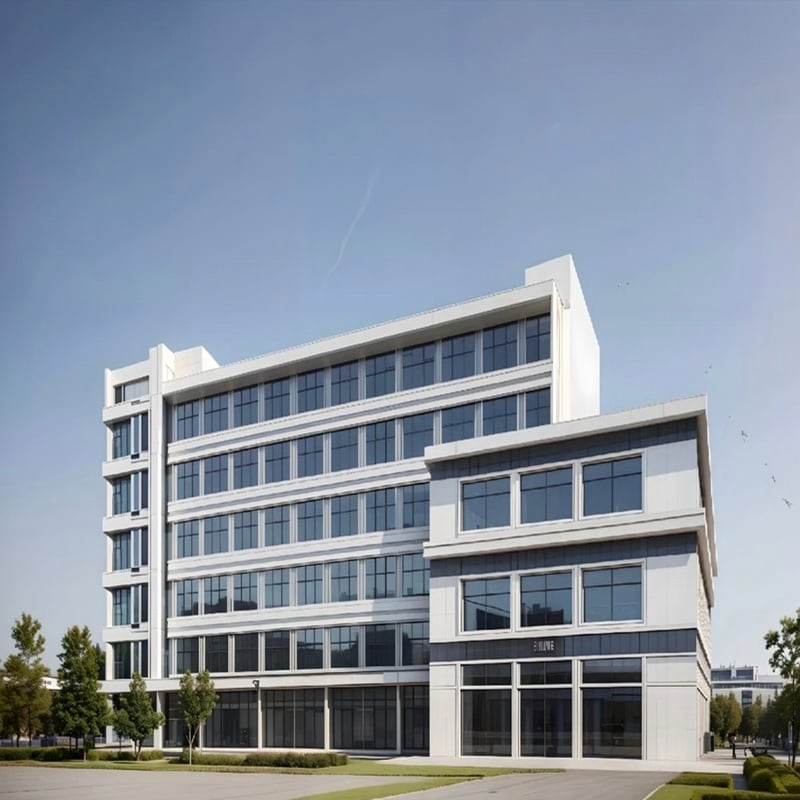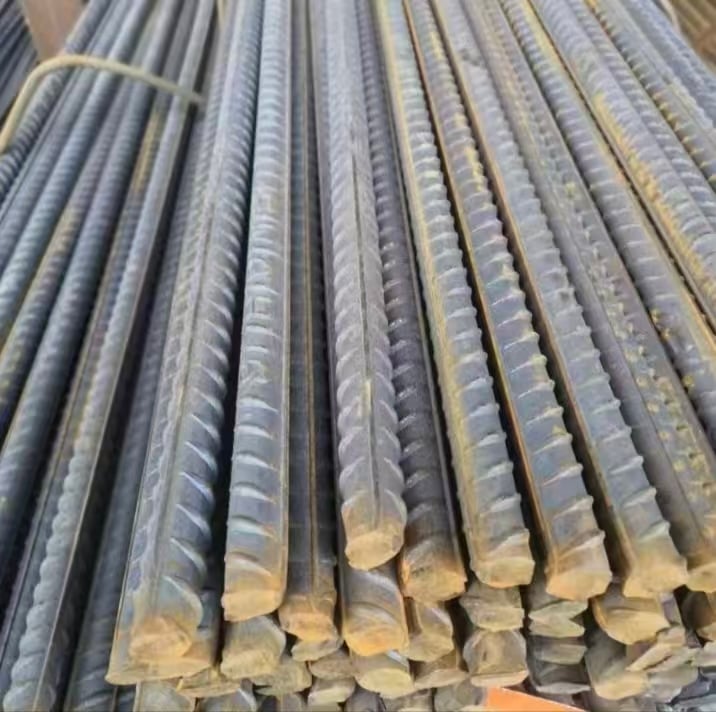
The global construction industry is facing an unprecedented pressure of carbon reduction, with the steel structure sector, as a core part of the industrial chain, accounting for 12.3% of global industrial carbon emissions. Against the backdrop of increasingly stringent environmental regulations and the deepening of the "dual carbon" strategy, the steel structure industry is undergoing a profound green transformation. Driven by technological innovation, policy guidance, and market demand, a series of environmental protection technologies represented by paint-free corrosion resistance, low-carbon manufacturing, and circular economy are emerging, reshaping the industry's development pattern. This article will analyze the core trends of steel structure environmental protection technology in 2026 and beyond, providing insights for enterprises and practitioners in the industry.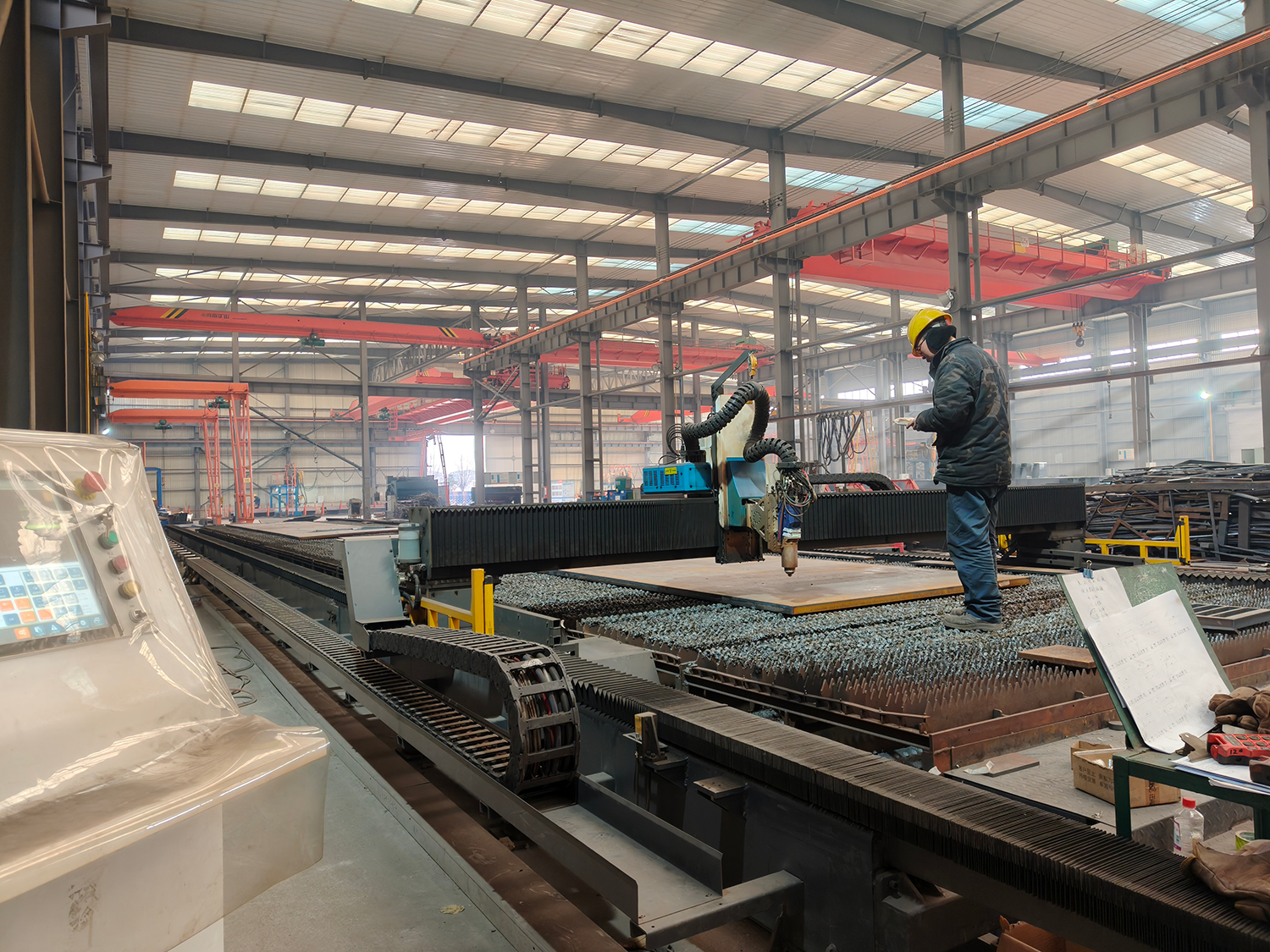
1. Material Innovation: Paint-Free & Low-Carbon Steel Becomes the Core Direction
Traditional steel structure protection relies on paint coating and galvanizing, which not only generate high VOCs emissions and hazardous waste but also increase lifecycle maintenance costs . In 2026, the development of environmental protection materials in the steel structure industry will focus on two key directions: paint-free corrosion-resistant steel and low-carbon smelted steel, leading the industry to bid farewell to the "high-pollution, high-maintenance" model.
Paint-free corrosion-resistant steel has become a global research and application hotspot due to its "natural rust prevention" advantage. Unlike ordinary carbon steel, this type of steel forms a dense and stable protective patina on the surface through the reaction of alloying elements with the natural environment, effectively blocking corrosion media penetration . According to data from the Technical Research Center of Finland (VTT), after 32 years of practical testing in atmospheric environments, the corrosion rate of paint-free corrosion-resistant steel stabilizes at ≤0.008mm/year, and its service life is comparable to that of coated steel, while eliminating the need for painting and galvanizing processes . Taking a ton of steel as an example, the use of paint-free technology can reduce CO₂ emissions by 280kg (including 120kg from galvanizing and 160kg from painting) , and reduce solid waste such as paint residue by 8-10kg . In Europe, SSAB, a leading steel enterprise, has promoted the application of paint-free weathering steel in bridge, industrial plant, and public building projects, achieving a 100% reduction in coating-related pollution and saving 30-40% of lifecycle maintenance costs . In China, the penetration rate of paint-free corrosion-resistant steel in new steel structure projects has increased from 8.2% in 2023 to 15.7% in 2026, and is expected to exceed 30% by 2030.
Low-carbon smelted steel, represented by hydrogen metallurgy and electric furnace steelmaking, is another core innovation in materials. Traditional blast furnace ironmaking relies on coke, accounting for 52% of the steel industry's carbon emissions . Hydrogen metallurgy technology uses green hydrogen instead of coke for iron reduction, which can reduce carbon emissions by more than 80% in the smelting process . In 2025, China Baowu Group's 300,000-ton green steel project using hydrogen metallurgy technology officially entered industrial operation, with a carbon emission intensity of only 0.12 tons of CO₂ per ton of steel, far lower than the national average of 1.8 tons . Electric furnace steelmaking, which uses scrap steel as raw material, has also developed rapidly. The proportion of electric furnace steelmaking in Europe has reached 35%, while in China it has increased to 28.9% in 2026, and is expected to reach 40% by 2030 . The widespread application of low-carbon smelted steel will promote the steel structure industry to achieve "carbon reduction at the source", and the carbon footprint of steel materials is expected to decrease by 45% by 2035 compared with 2020.
2. Process Upgrade: Intelligent Manufacturing Enables Low-Carbon Production
The production process of steel structures is a key link of energy consumption and emissions, and intelligent transformation has become an important path to improve environmental performance. In 2026, the integration of digital technology and green manufacturing will accelerate, and processes such as intelligent cutting, low-carbon welding, and waste recycling will be widely applied, promoting the industry to move towards "precision, energy-saving, and emission reduction".
Intelligent cutting technology, represented by high-power laser cutting, has replaced traditional flame cutting and plasma cutting, significantly improving energy efficiency and material utilization. The 30,000W bevel laser cutting machine and 20,000W flat laser cutting machine, which are widely used in the industry, adopt dry cutting technology and intelligent nesting software, reducing energy consumption by 35-40% compared with traditional equipment and increasing material utilization rate to over 93% . Meanwhile, the application of oil-free cutting technology has eliminated the need for oil-based lubricants, avoiding oil pollution and subsequent degreasing processes, reducing wastewater discharge by 30-50% in the production process. Leading enterprises such as Honglu Steel Structure and Zhongjian Kegong have built digital factories integrating BIM technology, IoT sensors, and automated production lines, realizing real-time monitoring and optimization of energy consumption and emissions in the production process. The comprehensive energy efficiency of their production lines has been improved by 20-25%, and the unit product carbon emission has been reduced by 18-22%.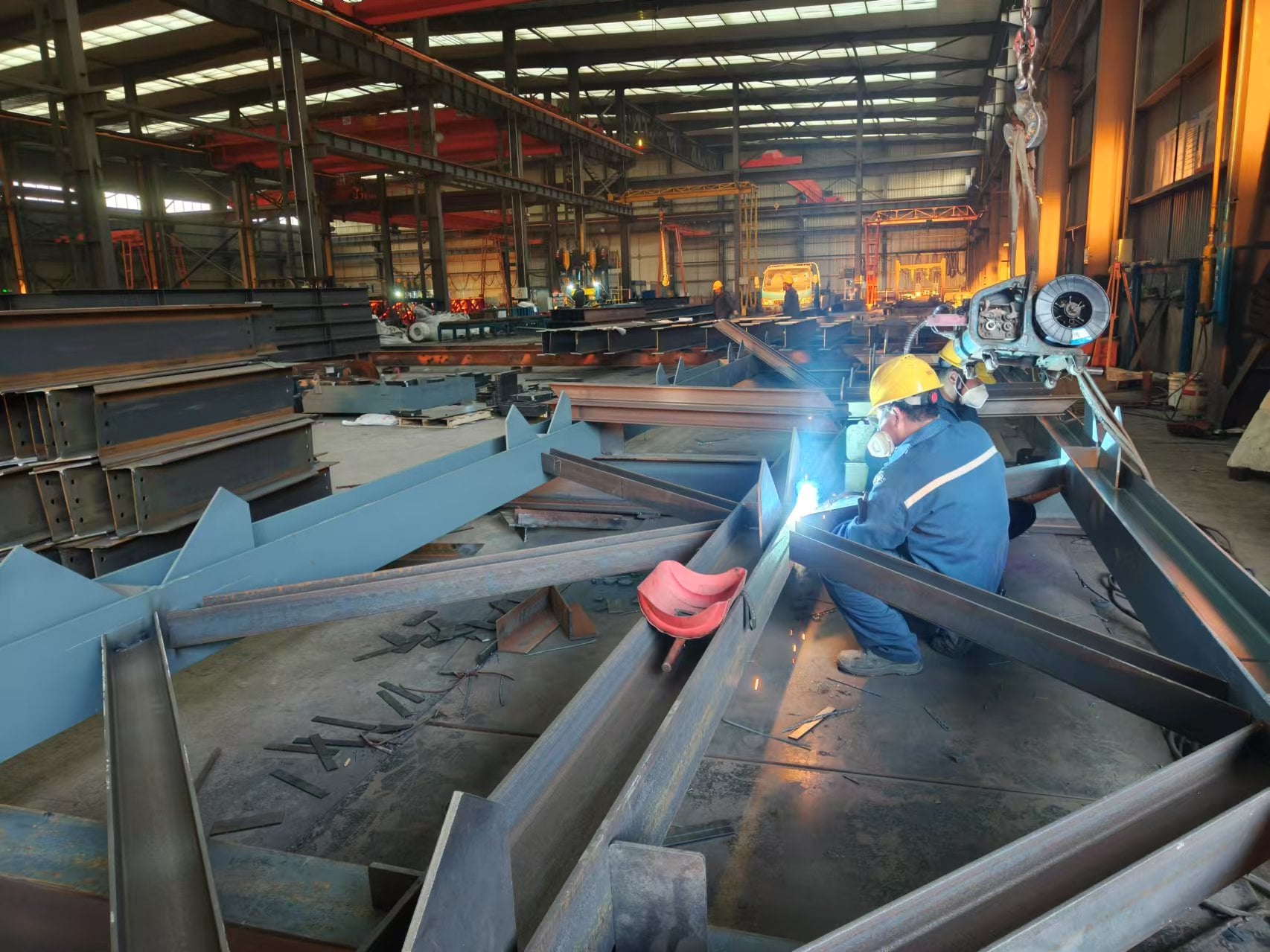
Low-carbon welding technology is another key breakthrough in the process upgrade. Traditional electrode welding generates a large amount of smoke and CO₂ emissions. In contrast, inverter welding machines and solid wire gas shielded welding technology can reduce smoke emissions by 70% and energy consumption by 25% . The emerging hydrogen welding technology uses hydrogen as the shielding gas, which not only eliminates CO₂ emissions during welding but also improves welding quality. A leading steel structure enterprise in China has applied hydrogen welding technology in a large-span exhibition center project, reducing welding-related carbon emissions by 90% and improving welding efficiency by 30% . In addition, the popularization of centralized smoke purification systems and waste heat recovery technology has further improved the environmental performance of the production process. The waste heat recovery rate of key enterprises has reached 85%, and the recovered heat can meet 30% of the factory's daily heating and domestic hot water needs.
Waste recycling has become an important part of the circular economy system of the steel structure industry. In 2026, the industry's scrap steel recycling rate has reached 82% globally, and the recycled scrap steel is used for electric furnace steelmaking, reducing resource consumption and carbon emissions. For example, each ton of recycled scrap steel can save 1.7 tons of iron ore, 0.6 tons of coke, and reduce 2.5 tons of CO₂ emissions . In addition, enterprises have established classified recycling systems for welding slag, iron oxide scale, and other solid wastes. After magnetic separation, briquetting, and other treatments, these wastes are reused as raw materials for building materials or steelmaking, with a comprehensive utilization rate of over 90% . The construction of the "raw material production - product application - waste recycling" closed-loop system has become an important indicator of the environmental competitiveness of steel structure enterprises.
3. Application Expansion: Green Integration with Prefabricated Buildings and New Energy
The application scenario of steel structure environmental protection technology is constantly expanding, and the deep integration with prefabricated buildings, new energy facilities, and urban renewal projects has become a new trend, promoting the transformation of the industry from "single product supply" to "integrated green solution".
Prefabricated steel structure buildings have become the main carrier of environmental protection technology application due to their advantages of high efficiency, energy saving, and low carbon. In 2025, the area of new prefabricated steel structure buildings in China reached 480 million square meters, accounting for 67.3% of the total prefabricated building area . The combination of paint-free corrosion-resistant steel, low-carbon smelted steel, and prefabricated technology not only reduces on-site construction waste by 70% and shortens the construction period by 25-30% but also reduces the lifecycle carbon emission of buildings by 35-40% compared with traditional reinforced concrete buildings . In urban renewal projects, the application of prefabricated steel structure technology can realize the rapid transformation of old buildings without causing large-scale environmental damage. In 2026, the penetration rate of steel structures in China's urban renewal projects has reached 43.7%, an increase of 24.3 percentage points compared with 2020 . In addition, modular steel structure buildings, which integrate structure, enclosure, energy, and intelligence, have emerged in data centers, biopharmaceutical plants, and other industrial buildings. Their standardized design and factory production not only improve construction efficiency but also facilitate disassembly and recycling, with a reuse rate of over 80%.
The integration with new energy facilities has opened up new development space for the steel structure industry. Steel structure photovoltaic (PV) integrated buildings, which combine steel structure roofs with PV panels, have become a typical application. The high strength and durability of steel structures can support the installation of PV panels, and the combination of the two can realize "building power generation", reducing the building's reliance on grid electricity. In 2026, the global market scale of steel structure PV integrated buildings reached 180 billion US dollars, with an annual growth rate of 28.5% . In addition, steel structures are widely used in wind power towers, hydrogen storage tanks, and other new energy facilities due to their advantages of large span, high load-bearing capacity, and corrosion resistance. The demand for steel structures in the new energy field is expected to reach 120 million tons by 2030, accounting for 15% of the total demand for steel structures.
4. Policy & Market Drive: The Formation of a Synergistic Mechanism for Green Transformation
The development of steel structure environmental protection technology is strongly supported by policy guidance and market demand, and a "policy-driven, market-led, and enterprise-led" synergistic mechanism has gradually formed, accelerating the industry's green transformation.
In terms of policy, countries around the world have introduced a series of policies to promote the development of low-carbon steel structures. The Chinese government has issued the "Steel Industry Green Low-Carbon Development Action Plan" and "Prefabricated Building Engineering Technology Standards", clarifying that by 2030, the comprehensive energy consumption per ton of steel will be reduced by 2%, the proportion of prefabricated buildings will reach 40%, and the penetration rate of green steel structure components will exceed 50% . The European Union's "Green Deal" and Germany's "Energy Transition Act" have set strict carbon emission standards for the construction industry, and projects using low-carbon steel structures can obtain carbon tax reductions and green financial support . The United States has launched the "Infrastructure Investment and Jobs Act", which allocates 50 billion US dollars to support the construction of green infrastructure, and steel structure projects using renewable steel and paint-free technology are given priority in funding . These policies have formed a strong incentive mechanism, guiding enterprises to increase investment in environmental protection technology research and development. In 2026, the R&D investment intensity of leading steel structure enterprises globally reached 3.8%, an increase of 1.5 percentage points compared with 2023.
In terms of market, the demand for green buildings has become the core driving force for the development of environmental protection technology. With the improvement of environmental awareness of developers and consumers, green building certification has become an important threshold for project competition. In China, projects that obtain three-star green building certification account for 28.6% of new buildings, and these projects generally require the use of low-carbon, environmentally friendly steel structure materials and technologies . In the international market, ESG (Environmental, Social, Governance) performance has become an important indicator for investors to evaluate enterprises. Steel structure enterprises with excellent environmental performance have higher financing capacity and market competitiveness. For example, Zhongjian Kegong and SSAB have been included in the FTSE4Good Index due to their outstanding green innovation achievements, and their financing costs are 15-20% lower than industry averages . The market demand for green products has promoted the price premium of environmental protection steel structure products. The price of paint-free corrosion-resistant steel and low-carbon smelted steel is 10-15% higher than that of traditional steel, but due to their advantages in lifecycle cost and environmental performance, they are still favored by high-end projects.
5. Challenge & Outlook: Toward a Sustainable Future of the Industry
While the steel structure environmental protection technology has achieved remarkable development, it still faces some challenges: first, the high cost of core technologies. The R&D and application costs of hydrogen metallurgy, high-performance paint-free steel, and other technologies are relatively high, which restricts the popularization among small and medium-sized enterprises; second, the imperfect standard system. The technical standards and testing methods for paint-free, low-carbon steel structures are not yet unified globally, which affects the large-scale application of products; third, the insufficient supply of green raw materials. The supply of green hydrogen, high-quality scrap steel, and other raw materials is limited, which restricts the development of low-carbon smelted steel.
Looking forward to the next five years, the steel structure environmental protection technology will show a trend of "faster innovation, wider application, and deeper integration". In terms of technology, the performance of paint-free corrosion-resistant steel will continue to be optimized, and the application scope will expand to high-rise buildings, bridges, and offshore engineering; hydrogen metallurgy technology will achieve large-scale commercialization, and the cost of low-carbon steel will be reduced by 30-40%; digital technologies such as BIM, digital twins, and IoT will be deeply integrated with environmental protection technology, realizing full lifecycle carbon management of steel structures . In terms of market, the global green steel structure market will grow at an average annual rate of 11.4%, and China will contribute more than half of the incremental demand; the "EPC + operation and maintenance" integrated service model will become mainstream, and enterprises will rely on technical authorization, digital platforms, and green certification to build high-margin business models . In terms of industry pattern, the concentration will continue to increase, and enterprises with core technologies, complete industrial chains, and global service capabilities will occupy a dominant position, while small and medium-sized enterprises will survive by focusing on niche markets and specialized technologies.
"The steel structure industry is an important part of the global low-carbon transformation, and environmental protection technology is the core driving force for its high-quality development," said an expert from the International Steel Structure Association. "In the future, the industry will no longer compete only on scale and cost, but on green innovation and lifecycle value creation. Enterprises that take the lead in mastering core environmental protection technologies and building green industrial chains will gain a competitive advantage in the new round of industrial upgrading."
 Hot News
2026-02-26
2026-01-16
2026-01-10
China steel structure manufacturer since 2008. 100,000m² factory, 30,000 tons/year. Custom steel buildings, grid trusses, profiled steel sheets & prefab houses. ISO/CE/GOST certified, exporting to 70+ countries. Free design & FOB quote in 24h.
No. 62-1, Zhenxing Street, Dayushan Park, Lianshan District, Huludao City, Liaoning Province, China
Copyright © 2026 by Liaoning Shuangli Construction (Group) Co., Ltd. Privacy Policy
 EN
EN