
 EN
EN
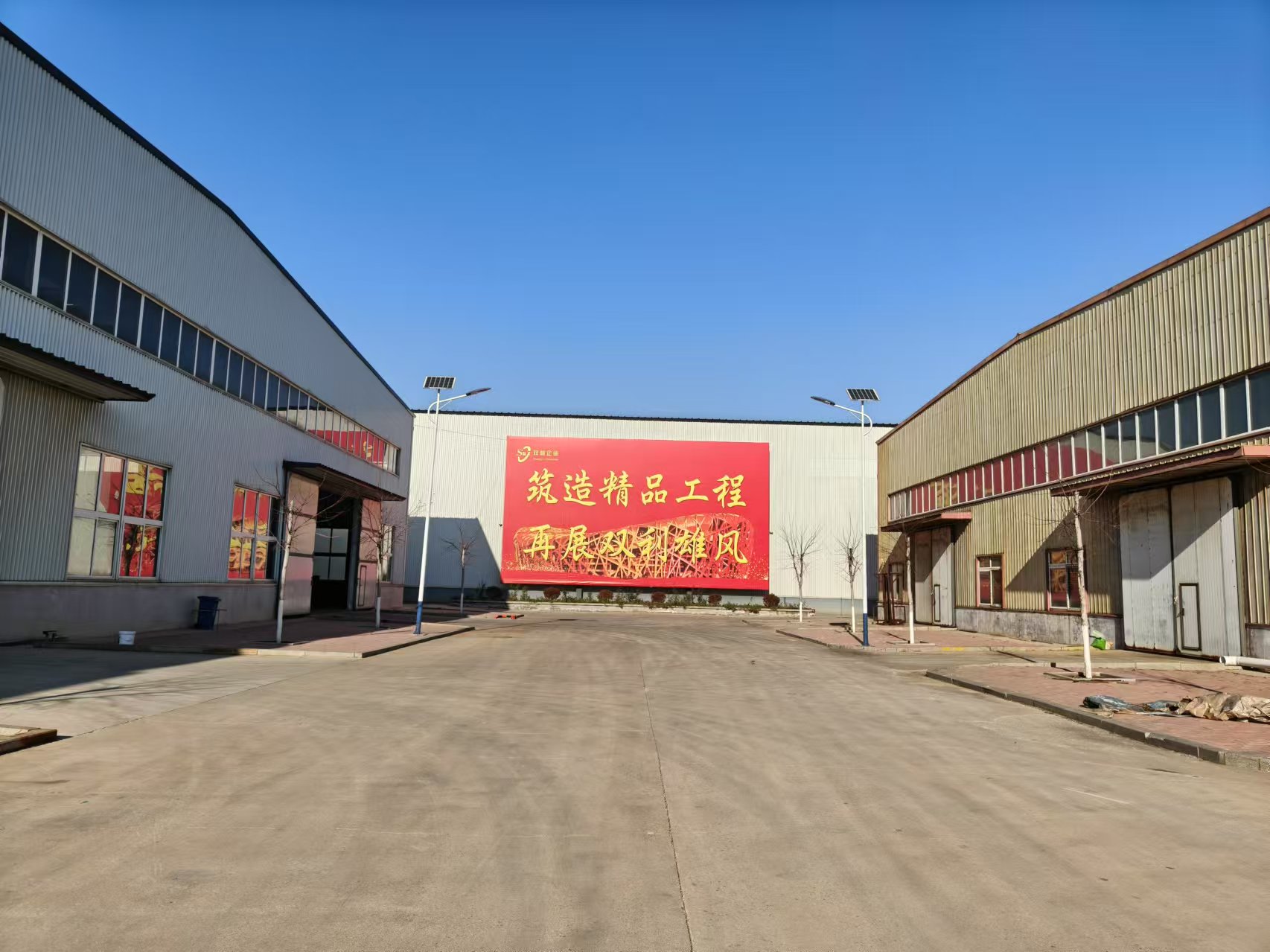
Verify Credentials and Proven Expertise of Structural Steel Fabricators
AISC Certification, ISO 9001 Compliance, and Project-Specific Qualification History
Begin by verifying the fabricator’s formal credentials—starting with AISC (American Institute of Steel Construction) certification, the U.S. benchmark for structural steel competence. AISC certification requires annual third-party audits covering quality management, welding procedures, personnel qualifications, and safety systems. Shops that maintain this certification consistently demonstrate lower rework rates and stronger schedule adherence. Internationally, ISO 9001:2015 certification signals a risk-based, process-driven quality system—but it is not a substitute for domain-specific rigor. Crucially, certifications must be paired with evidence of relevant experience. Request documented project references matching your scope in scale (tonnage, footprint), complexity (e.g., curved members, seismic detailing, AESS), and sector (commercial high-rises, industrial process structures, or infrastructure like bridges and transit hubs). Confirm material grade familiarity, connection type proficiency, and regulatory compliance history—including past adherence to local building codes and jurisdictional review processes. Where possible, speak directly with prior clients about on-site responsiveness, problem resolution, and consistency between quoted timelines and actual delivery.
Portfolio Review: Alignment with Project Scale, Complexity, and Sector (e.g., Commercial, Industrial, Infrastructure)
A meaningful portfolio review goes beyond glossy images—it reveals operational capacity and contextual fluency. Assess whether past projects reflect comparable tonnage, piece count, and geometric complexity. A shop adept at light commercial framing may lack the crane capacity, plate-handling infrastructure, or QA bandwidth needed for a 5,000-ton hospital structure or a long-span airport terminal. Equally important is sector-specific mastery: commercial builders prioritize speed and tolerance control; industrial fabricators routinely handle heavy-lift modules, equipment supports, and corrosion-resistant coatings; infrastructure specialists excel in fatigue-critical connections, marine-grade protection systems, and harsh-environment durability testing. Look for evidence—not just claims—of work executed under similar design standards (e.g., AISC 360, ASCE 7), procurement models (design-build vs. bid-build), and delivery constraints (fast-track, phased occupancy). Consistent alignment across these dimensions signals readiness—not just capability.
Assess End-to-End Capabilities of Structural Steel Fabricators
Integrated Services: Detailing, CNC Fabrication, Surface Protection, and Erection Support
The strongest value proposition lies in vertically integrated execution—where detailing, fabrication, finishing, and erection support operate as coordinated functions, not siloed services. Seamless integration begins with model-driven detailing: Tekla or Advance Steel models that feed directly into CNC machinery eliminate manual data translation, reducing dimensional errors and programming delays. Precision multi-axis CNC cutting, drilling, and machining ensure repeatability down to ±0.5 mm—critical for tight-tolerance connections and AESS applications. In-house surface protection—whether hot-dip galvanizing, metallizing, or intumescent fireproofing—ensures full traceability, controlled cure cycles, and compliance with SSPC or ASTM specifications, avoiding variability from subcontracted vendors. Erection support extends beyond logistics: leading fabricators co-develop lift plans, sequence deliveries by zone and trade, and provide real-time rigging guidance—cutting crane time and minimizing field adjustments. According to AISC’s 2023 industry benchmarking report, fully integrated fabricators reduce change orders by up to 20% and improve schedule predictability by an average of 11 days per $10M of steel value.
Evaluate Early Collaboration for Design-Build Synergy
Engaging structural steel fabricators during schematic design—not just procurement—unlocks measurable efficiency gains. Their input refines buildability, sharpens cost certainty, and compresses critical path duration.
Constructability Input During Design Development to Avoid Rework and Delays
Fabricators bring shop-floor realism to early design decisions—flagging issues invisible on paper but costly in practice: weld access limitations around deep column splices, impractical cope geometries for standard tooling, or connection configurations requiring custom jigs or field adjustments. Dodge Data & Analytics (2021) found that projects incorporating structured constructability reviews before design freeze reduced total costs by up to 15%, primarily by avoiding late-stage redesigns and expedited fabrication. For example, shifting a beam web opening to align with standard drill patterns can eliminate weeks of custom programming and setup time. When embedded early, fabricators help lock in efficient member sizing, standardized connection families, and optimized bolt patterns—reducing engineering iterations and preserving sequencing logic. This proactive alignment prevents cascading delays: unresolved details stall steel orders, disrupt erection sequencing, and idle expensive cranes.
Erection Sequence Planning and Connection Detailing Optimization with Structural Steel Fabricators
Collaborative erection planning transforms theoretical connections into field-ready solutions. Fabricators who simulate lift sequences digitally—integrating crane reach, bracing requirements, and temporary stability—can refine connection geometry to match actual assembly order. A shear tab relocated to avoid interference with a temporary brace saves hours per floor; converting a field-welded moment connection to a pre-assembled bolted alternative accelerates installation and reduces safety exposure. Joint sequencing also informs staging: identifying the lightest first lifts ensures crane selection matches site constraints, while confirming bracing placement aligns with planned erection direction avoids costly rework. Research by the Structural Steel Industry Association (2020) shows such coordination cuts steel erection time by an average of 12%, with secondary benefits in reduced labor hours, fewer RFIs, and improved worker safety through predictable, pre-validated workflows.
Confirm Rigorous Quality Assurance Across the Fabrication Lifecycle
Welding Procedure Specifications (WPS), AWS D1.1 Compliance, and NDT Inspection Protocols
Welding is the structural backbone—and its integrity hinges on disciplined process control. Every weld must be governed by a qualified Welding Procedure Specification (WPS), validated against the American Welding Society’s AWS D1.1 Structural Welding Code. This code defines essential variables—including base metal groupings, filler classification, preheat/interpass temperatures, and post-weld heat treatment—ensuring welds meet strength, ductility, and fatigue performance requirements. But documentation alone is insufficient: rigorous Non-Destructive Testing (NDT) validates execution. Leading fabricators apply tiered inspection protocols—magnetic particle (MT) or liquid penetrant (PT) for surface flaws, ultrasonic (UT) for subsurface defects—based on joint category, loading condition, and consequence of failure. These inspections are traceable to specific welds, welders, and WPS revisions, with full records provided upon request. When embedded across the lifecycle—from WPS qualification and welder certification through in-process checks and final UT/MT—this QA framework prevents field failures, minimizes rework, and delivers auditable assurance that every connection performs as engineered.
FAQ Section
What is AISC certification and why is it important?
AISC certification is a benchmark for structural steel fabricators, ensuring they meet stringent quality management, personnel qualifications, welding procedures, and safety standards. Certified fabricators demonstrate consistent schedule adherence and lower rework rates.
Why should I review a fabricator's project portfolio?
Reviewing a portfolio helps gauge whether a fabricator has experience aligning with your project's scope, complexity, and sector. It also offers insight into their operational capacity and sector-specific mastery for successful execution.
What are integrated services provided by top steel fabricators?
Top steel fabricators offer integrated services such as detailing, CNC fabrication, surface protection, and erection support, ensuring seamless workflow and reducing errors throughout the project lifecycle.
How does early collaboration impact steel fabrication projects?
Engaging fabricators early during schematic design helps refine buildability, optimize connection detailing, avoid rework, and speed up schedules through proactive constructability reviews and sequencing alignment.
Why is rigorous quality assurance important in steel fabrication?
Rigorous QA ensures weld integrity, compliance with AWS D1.1 standards, and prevents field failures through disciplined inspections like NDT, in-process checks, and traceable documentation.