 EN
EN
Core Principles of Structural Stability in Steel Bridge Design
Defining structural stability: buckling, lateral-torsional instability, and equilibrium loss in steel bridges
Structural stability in steel bridges is the capacity to maintain equilibrium under design loads without sudden, irreversible deformation. Buckling—lateral deflection of compression members under axial load—is the leading cause of steel bridge failure, accounting for over 40% of documented collapses (Parker 2022). Lateral-torsional instability occurs when flexural stresses induce coupled bending and twisting in slender girders, while equilibrium loss reflects a global inability to resist applied forces, resulting in uncontrolled displacement. These failure modes are governed by slenderness ratios, cross-sectional geometry, and material behavior—and are prevented through rigorous adherence to critical buckling thresholds defined in AISC 360 and EN 1993-1-1.
Limit states design and redundancy: preventing catastrophic instability through robust load paths
Limit states design (LSD) provides a systematic framework for evaluating both ultimate (collapse) and serviceability (deflection, vibration, cracking) performance limits. Modern codes—including AASHTO LRFD and Eurocode 3—mandate structural redundancy: deliberate incorporation of multiple, independent load paths so that localized damage does not trigger system-wide failure. Continuous girder systems exemplify this principle, enabling stress redistribution when supports are compromised. Research confirms such redundancy reduces probability of catastrophic collapse by 62% compared to statically determinate configurations (ASCE 2023). Material overstrength factors, embedded in LSD protocols, further widen safety margins against unforeseen dynamic or overload events.
Bracing Systems and Stiffener Strategies for Steel Bridge Stability
Lateral, torsional, and diaphragm bracing: function, placement, and code-compliant design for steel bridges
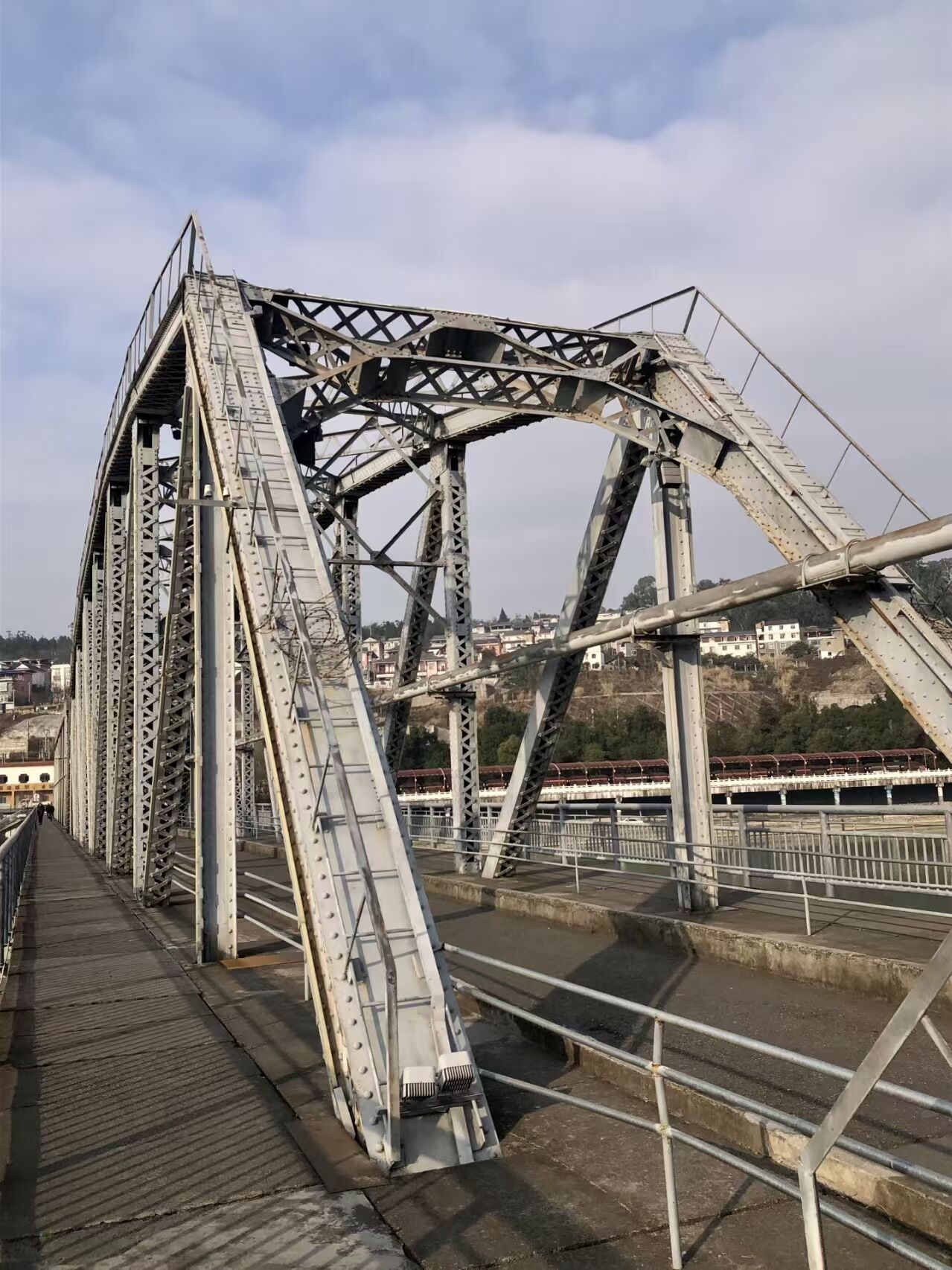
Lateral bracing restrains out-of-plane movement of girders under wind, seismic, or eccentric live loads and is typically installed perpendicular to the span axis at key locations—especially mid-span and near supports where lateral stiffness is most critical. Torsional bracing, often realized through cross-frames or K-bracing, resists rotational distortion by maintaining section integrity and aligning with AISC 341 seismic detailing requirements. Diaphragm bracing ensures uniform load sharing among parallel girders and must comply with AASHTO LRFD spacing rules—typically no greater than 15 times the girder depth—to suppress local buckling. Collectively, well-placed bracing systems reduce lateral deflection by up to 60%, as validated by full-scale testing and calibrated FEA models.
Stiffener integration with girders and box sections to enhance torsional rigidity and resist local buckling
Stiffeners are essential for controlling local instability in thin-walled steel sections. Longitudinal stiffeners on girder webs subdivide large panels into smaller, more stable zones; their height-to-thickness ratios follow EN 1993-1-5 limits to maximize buckling resistance. Transverse stiffeners at bearing points prevent web crippling by distributing concentrated reactions, while intermediate stiffeners—spaced at intervals ≤1.5 times the web depth—mitigate shear-induced buckling. In box girders, internal diaphragm stiffeners preserve cross-sectional shape under torsion, with thickness selected to avoid yielding before global failure. When integrated per best-practice guidelines, stiffener systems increase ultimate load capacity by 35–40% while reducing overall weight relative to unstiffened alternatives.
Load Effects, Analysis Methods, and Erection-Phase Stability Control
Static and dynamic load distribution impacts on stability: dead, live, wind, and erection loads on steel bridges
Steel bridges must safely accommodate overlapping static and dynamic load effects: permanent dead loads (self-weight, deck, utilities), variable live loads (traffic, pedestrians), and environmental actions (wind pressure, thermal gradients, seismic forces). Crucially, erection-phase loads—often asymmetric and transient—pose acute stability risks, particularly in cantilevered or incrementally launched systems. Studies indicate improper load sequencing or unbalanced temporary loading can degrade buckling resistance by as much as 40% in slender, thin-walled girders. Dynamic amplification from wind gusts or seismic excitation further challenges stability, requiring analysis of resonant frequencies and harmonic response to preclude lock-in vibrations or parametric instability.
Nonlinear analysis and stability verification techniques for critical erection stages
Nonlinear finite element analysis (FEA) is indispensable for modeling real-world instability mechanisms during high-risk construction phases. Unlike linear methods, nonlinear FEA captures geometric imperfections, material plasticity, large displacements, and contact behavior—particularly vital for temporary shoring, falsework, and incremental launching sequences. Eigenvalue buckling analysis remains the standard for assessing first-mode torsional or lateral instability at each advancement stage. Best practice combines digital simulation with field instrumentation—such as strain gauges and inclinometers—to verify actual stress and deformation responses against predicted thresholds. Per AASHTO LRFD, all erection-stage analyses must demonstrate minimum safety factors of 1.5 against predicted critical loads.
Material Performance and Superstructure Design Optimization for Long-Term Stability
Material selection and superstructure optimization jointly define long-term stability performance. High-strength weathering steel—used in over 70% of new U.S. highway bridges—reduces corrosion-related degradation by 40% versus conventional carbon steel, preserving section capacity in aggressive environments. Computational design optimization enables efficient load-path alignment, achieving up to 30% steel weight reduction without compromising buckling or fatigue resistance. Ongoing innovation targets weld-zone fatigue life, where microcrack propagation remains the dominant long-term threat. Concurrently, superstructure refinements—including optimized stiffener layouts, tapered flanges, and hybrid cross-sections—enhance torsional rigidity and mitigate distortion-induced secondary stresses. This integrated strategy cuts maintenance frequency by 25% and extends reliable service life beyond 100 years—critical for high-volume corridors and seismically active regions where structural resilience directly safeguards public safety.